Long Walk to Power Resilience – Unlocking LNG into South Africa



This article has been supplied.
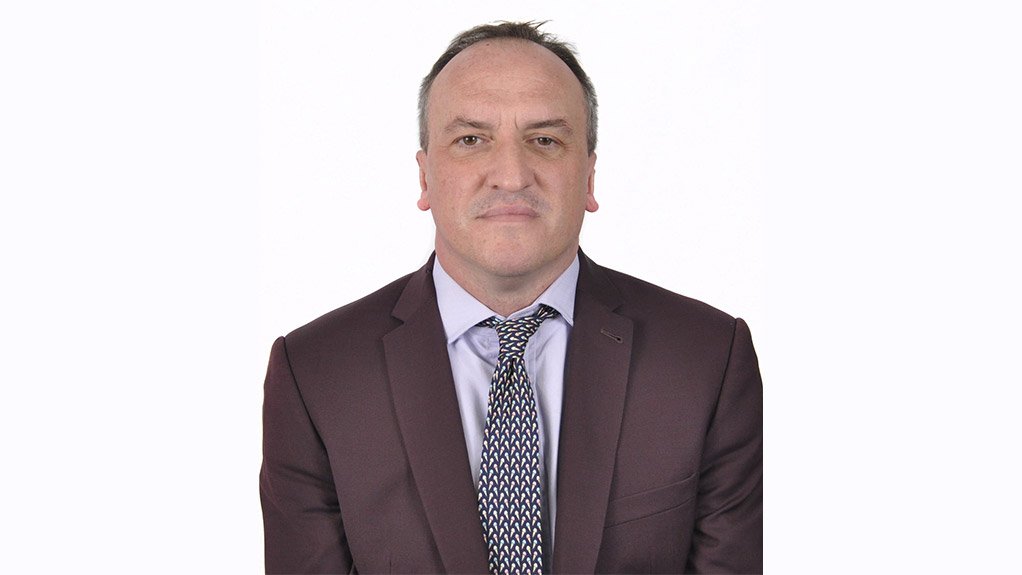
By: Paul Eardley-Taylor, Gas Sector Lead, Standard Bank Group
Gas means different things in different geographies. In the United States of America (USA), “Gas” means natural gas or gasoline. In South Africa (SA), gas normally means Liquefied Petroleum Gas or more commonly, cylinders seen at restaurants.
Globally though, gas means natural gas (methane or CH4).
Gas is used across multiple applications. For example, Gas to Power (GTP), Industrial applications (steam, process heat) and heating (e.g. commercial buildings and residential) across the Northern Hemisphere.
Per the Energy Institute’s Statistical Review, natural gas represents 25.1% of the world’s Total Energy Supply (TES). Within the power sector, 22% of the world’s generation (in Terawatt Hours) comes from GTP.
Within SA, both percentages are very different. Natural Gas’ percentage of SA Total Energy Supply is 3.3% (largely Sasol). In the case of GTP, SA does not presently have a single Kilowatt Hour of grid-connected GTP.
SA Backdrop
The core reason behind SA’s lack of natural gas is two-fold. Firstly, per the Energy Institute (2026), Coal remains 73% of South Africa’s TES. The second reason is that, geologically, South Africa has not had historically ready access to natural gas, compared to say USA or Nigeria.
As such, SA traditionally had some access to Methane Rich Gas (MRG) produced as a by-product of Sasol’s coal to liquids production. This position changed in 2004 when Sasol started operating a major gas export project which transported Mozambique’s onshore natural gas (from the Pande Temane fields) through the 865km Republic of Mozambique Pipeline Investments Company (ROMPCO) pipeline to Secunda.
The gas was primarily for Sasol’s own use in its Secunda and Sasolburg complexes, although over the years some 40 Petajoules (PJ) of natural gas has been made available for third parties, with around 25 PJ of MRG also available from Sasol, making a total third-party market of 65 PJ.
As has been extensively discussed, Pande Temane’s gas production is now organically declining.
Sasol’s date for ceasing the third-party sale of natural gas and MRG has been extended but is now scheduled to firmly cease in June 2030. This cessation of supply to industrial consumers is known as the “Gas Cliff”. Without an alternative supply source, multiple SA businesses will be affected and potentially thousands of jobs could be lost.
In parallel with the “Gas Cliff”, the bulk of Eskom’s power station fleet comprises coal-fired power stations that came online in the 1980s. Multiple stations are scheduled to reach the end of their operating life from 2030 onwards, which will reduce South Africa’s available electricity generation. This is known as the Power Cliff.
The argument is that importing Liquefied Natural Gas (LNG) into South Africa can help solve each of the Gas and Power Cliffs (boosting energy security). This is also being seen as a route to massively expand SA’s gas supply, albeit at an incremental (LNG driven) price compared to the historical price driven by Mozambican onshore gas charged to (largely industrial) gas consumers. That said, when used in the power sector, LNG will be cheaper than diesel-fired generation.
LNG Import Terminals
There are two LNG terminals in advanced development (the country does not yet have an operating terminal). The Matola Floating Storage and Regasification Unit (FSRU), in Southern Mozambique, is targeted to send its natural gas through the existing ROMPCO pipeline. In time, it will also supply Southern Mozambique. This project is sponsored by Gigajoule and TotalEnergies.
In Richards Bay, KwaZulu Natal, the Zululand Energy Terminal (ZET) (sponsored by Vopak, Reatile and Transnet Pipelines) was selected to own and operate a 3 MTPA Floating Storage Unit (FSRU) which in time will be supplemented by a 4.5 MTPA Storage Tank. ZET will connect to the existing Lilly gas pipeline.
Both projects are expected to take Final Investment Decision (FID) in the 2nd Half of 2027. Elsewhere, LNG import terminals are also being developed at Coega by the Central Energy Fund and at Durban by Vitol Group, with the possibility also being raised of an additional import terminal at Saldanha.
The Role of GTP
A new LNG import terminal is argued to broadly require around 100 PJ of capacity purchases (2 MTPA of LNG) to be acceptable to its investors. As such, SA’s existing gas market of 65 PJ is insufficient to support two new terminals.
Accordingly, the Integrated Resources Plan 2025 (IRP) envisages the building of 6 GW of GTP by 2030 and 17 GW by 2039. This is needed not just to replace the retiring Eskom capacity, but also to support the significant Gigawatts of new Variable Renewable Electricity (VRE) capacity being built (which is inherently intermittent and weather dependent).
The first key demand source is the 2 GW GTP programme promoted by the Department of Energy & Electricity, for which 2.8 GW of GTP capacity from four bids was submitted on 29th May. We understand that two bids were to have their gas sourced from Matola and two from ZET.
In broad numbers, 2 GW of GTP requires the purchase of 100 PJ of terminal capacity which, when added to other sources of demand (see below) can take both terminals towards an FID in 2027. Also, in the case of ZET, we note that Eskom is planning to build 3 GW of GTP at Richards Bay, which could be seen as being executed in phases (for example, over a 5 to 10-year period).
The Unknown Knowns and the potential for Investment Scale
Final numbers will not be known until each constituent project reaches financial close.
Given the current evidence, it is reasonable to suppose that 2.8 GW of GTP bids could have a USD 5.6 billion total capital expenditure requirement. Perhaps the two LNG terminals (assuming a Storage Tank is built by ZET) could cost USD 1.5 billion.
In addition, the ancillary projects (e.g. SSLNG, Lilly Pipeline, Marine Bunkering, Avon Fuel Switch) could perhaps require another USD 500m. Accordingly, the cumulative LNG/Gas/GTP investment requirement could be around USD 7.5bn (or ~ZAR 120 – 130bn).
This will be a major contribution to SA’s capital formation from 2027, with most of the investment expected to come from private sources. Shortly afterwards, Eskom’s first phase of Richards Bay GTP could take FID. Assuming a 1 GW development, this could be another USD 2bn, making an overall investment requirement of ~USD 9-10bn.
As of July 2026, the building blocks of SA LNG Imports / Gas are starting to fall into place. For example, key target contractual counterparties have recently been announced by ZET and four GTP bids were submitted in May 2026.
The next key milestone is expected to be the preferred bidder announcement for the 2 GW GTP Programme. This will then trigger intensive work towards the commercial signing and closing of all constituent projects. It is realistic to assume that individual projects can take FID / Financial Close from the 2nd half of 2027 onwards.
Article Enquiry
Email Article
Save Article
Feedback
To advertise email advertising@creamermedia.co.za or click here
Research Reports
Projects

Latest Multimedia
Latest News

Showroom
North Ridge Pumps is an independent manufacturer of pumps. We have a proven track record for product support and customer service throughout the...
VISIT SHOWROOM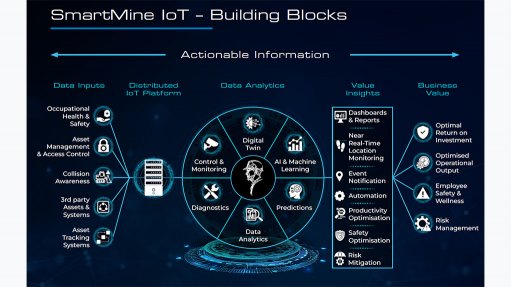
SmartMine IoT has been developed with the mining industry in mind, to provides our customers with powerful business intelligence and data modelling...
VISIT SHOWROOM
Press Office
Announcements
What's On
Subscribe to improve your user experience...
Option 1 (equivalent of R125 a month):
Receive a weekly copy of Creamer Media's Engineering News & Mining Weekly magazine
(print copy for those in South Africa and e-magazine for those outside of South Africa)
Receive daily email newsletters
Access to full search results
Access archive of magazine back copies
Access to Projects in Progress
Access to ONE Research Report of your choice in PDF format
Option 2 (equivalent of R375 a month):
All benefits from Option 1
PLUS
Access to Creamer Media's Research Channel Africa for ALL Research Reports, in PDF format, on various industrial and mining sectors
including Electricity; Water; Energy Transition; Hydrogen; Roads, Rail and Ports; Coal; Gold; Platinum; Battery Metals; etc.
Already a subscriber?
Forgotten your password?
Receive weekly copy of Creamer Media's Engineering News & Mining Weekly magazine (print copy for those in South Africa and e-magazine for those outside of South Africa)
➕
Recieve daily email newsletters
➕
Access to full search results
➕
Access archive of magazine back copies
➕
Access to Projects in Progress
➕
Access to ONE Research Report of your choice in PDF format
RESEARCH CHANNEL AFRICA
R4500 (equivalent of R375 a month)
SUBSCRIBEAll benefits from Option 1
➕
Access to Creamer Media's Research Channel Africa for ALL Research Reports on various industrial and mining sectors, in PDF format, including on:
Electricity
➕
Water
➕
Energy Transition
➕
Hydrogen
➕
Roads, Rail and Ports
➕
Coal
➕
Gold
➕
Platinum
➕
Battery Metals
➕
etc.
Receive all benefits from Option 1 or Option 2 delivered to numerous people at your company
➕
Multiple User names and Passwords for simultaneous log-ins
➕
Intranet integration access to all in your organisation